Table of Contents
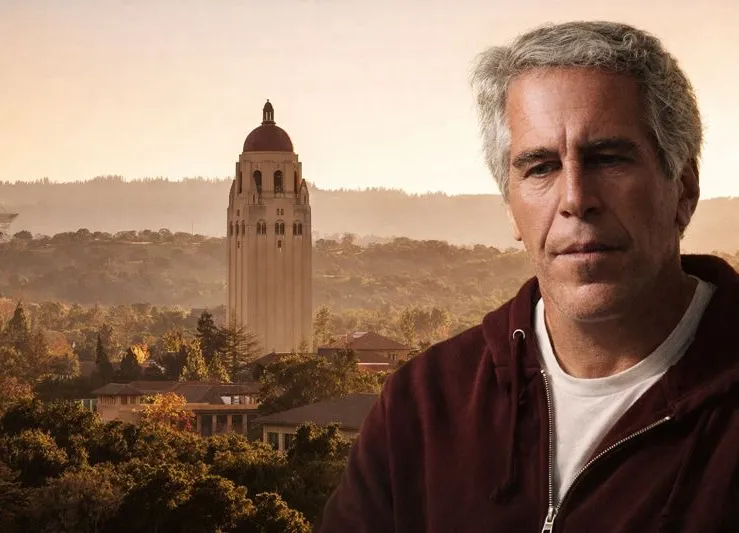
The Stanford Review has found that Jeffrey Epstein, through his close involvement with world-renowned neuroscientist Stephen Kosslyn, sought to create a behavioral engineering institute at Stanford University. This finding comes amidst the Friday DOJ release of 3.5 million pages of the files concerning the case of the convicted sex offender, which has since implicated and exposed dozens of high-profile names and institutions.
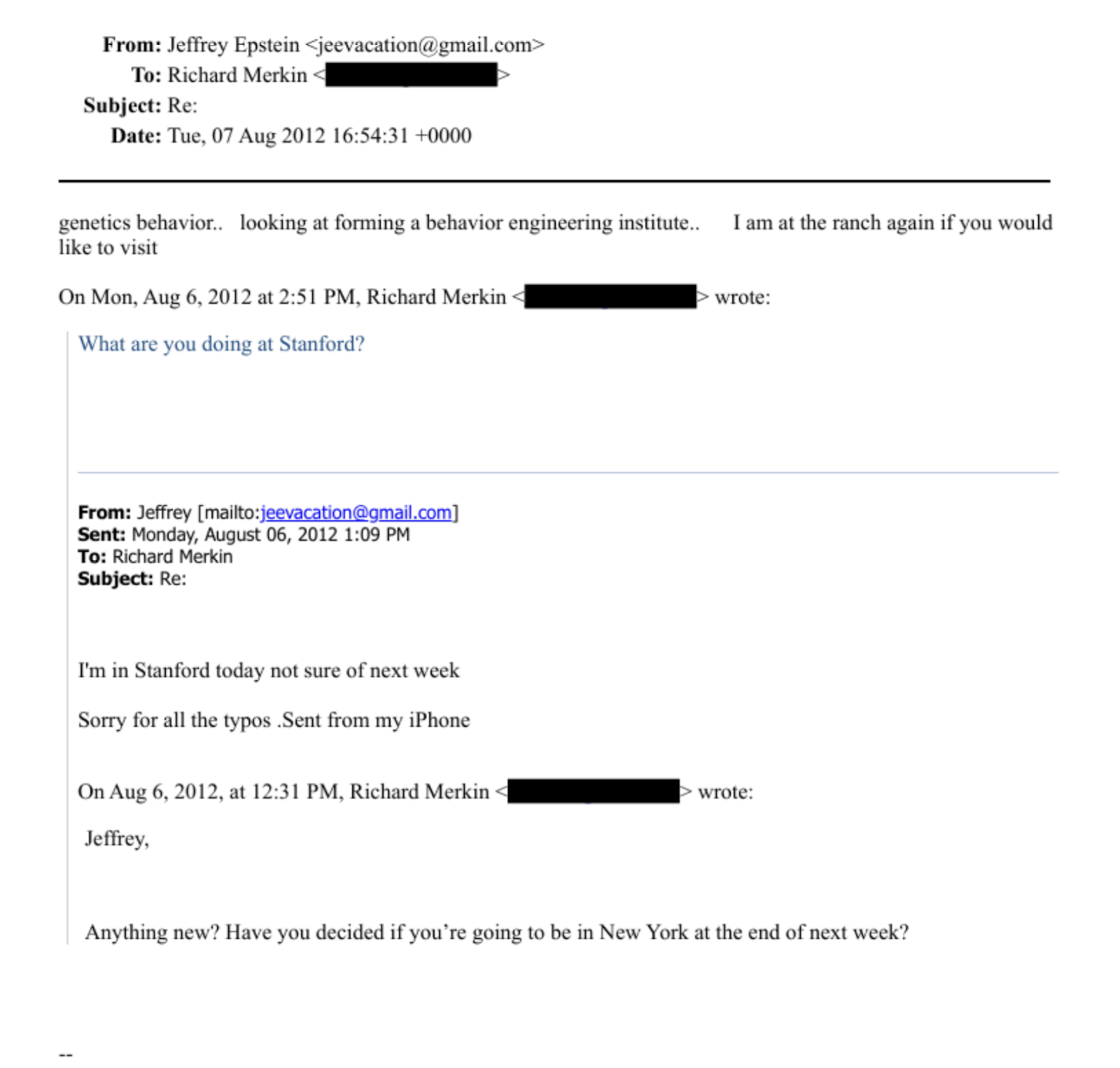
On August 6, 2012, Jeffrey Epstein exchanged messages with Richard Merkin, CEO of the Heritage Group Healthcare Investment Partners. Merkin initiated the thread, asking Epstein whether he would be in New York at the end of the week. Epstein responded, "I'm in Stanford today, not sure of next week." Merkin asked, "What are you doing at Stanford?" Epstein replied, "genetics behavior.. looking at forming a behavior engineering institute.. I am at the ranch again if you would like to visit."
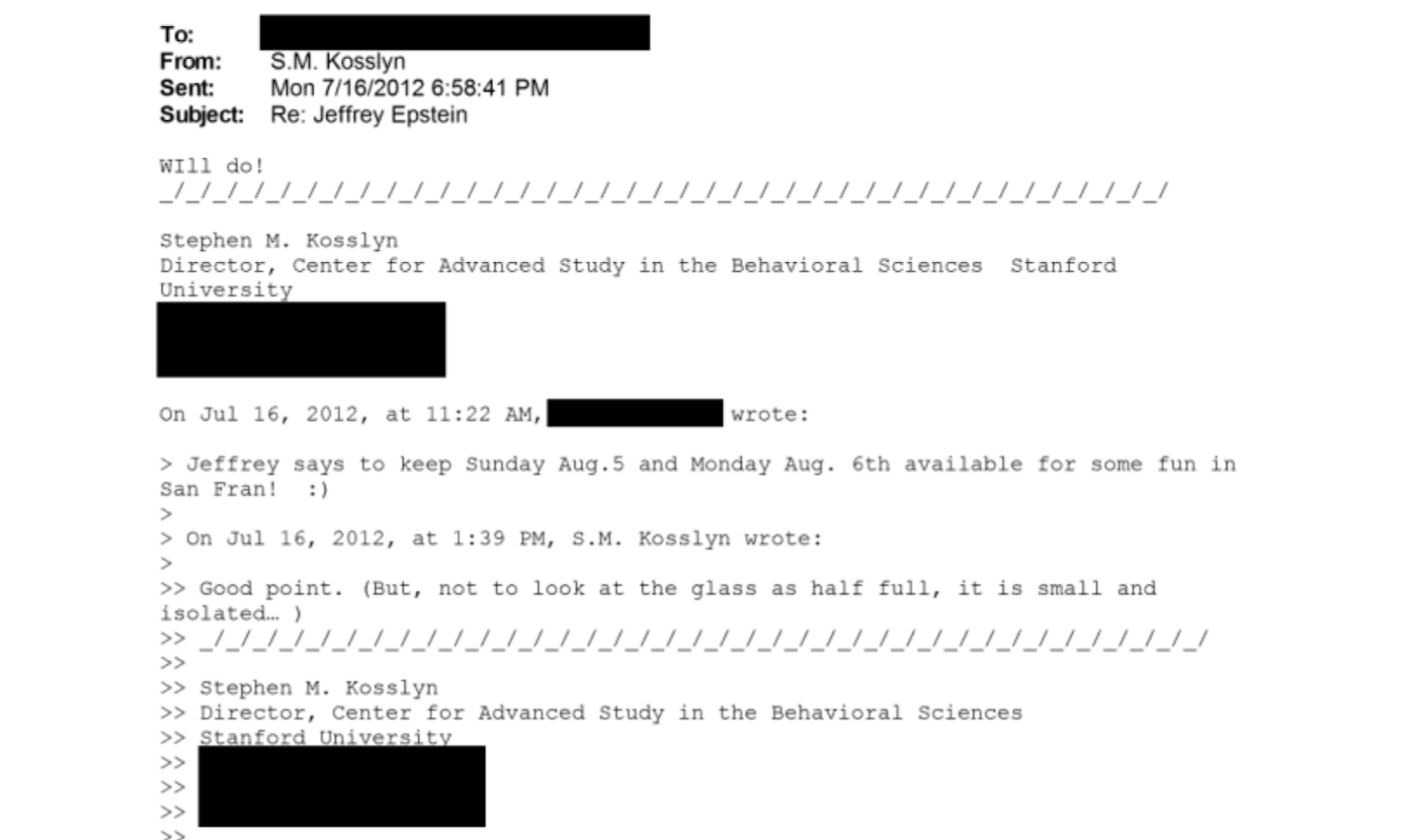
That same day, Stephen Kosslyn, then Director of Stanford's Center for Advanced Study in the Behavioral Sciences (CASBS) and Professor Emeritus at Harvard University, sent a detailed itinerary to Lesley Groff, Epstein's assistant, for the following morning. Epstein was to pick up Kosslyn at his house in San Francisco, and they would drive down to Palo Alto for a visit to CASBS. After touring the facility, they would have lunch on the Stanford campus. Groff told Kosslyn that Epstein wanted him to block off Sunday and Monday "for some fun in San Fran!"

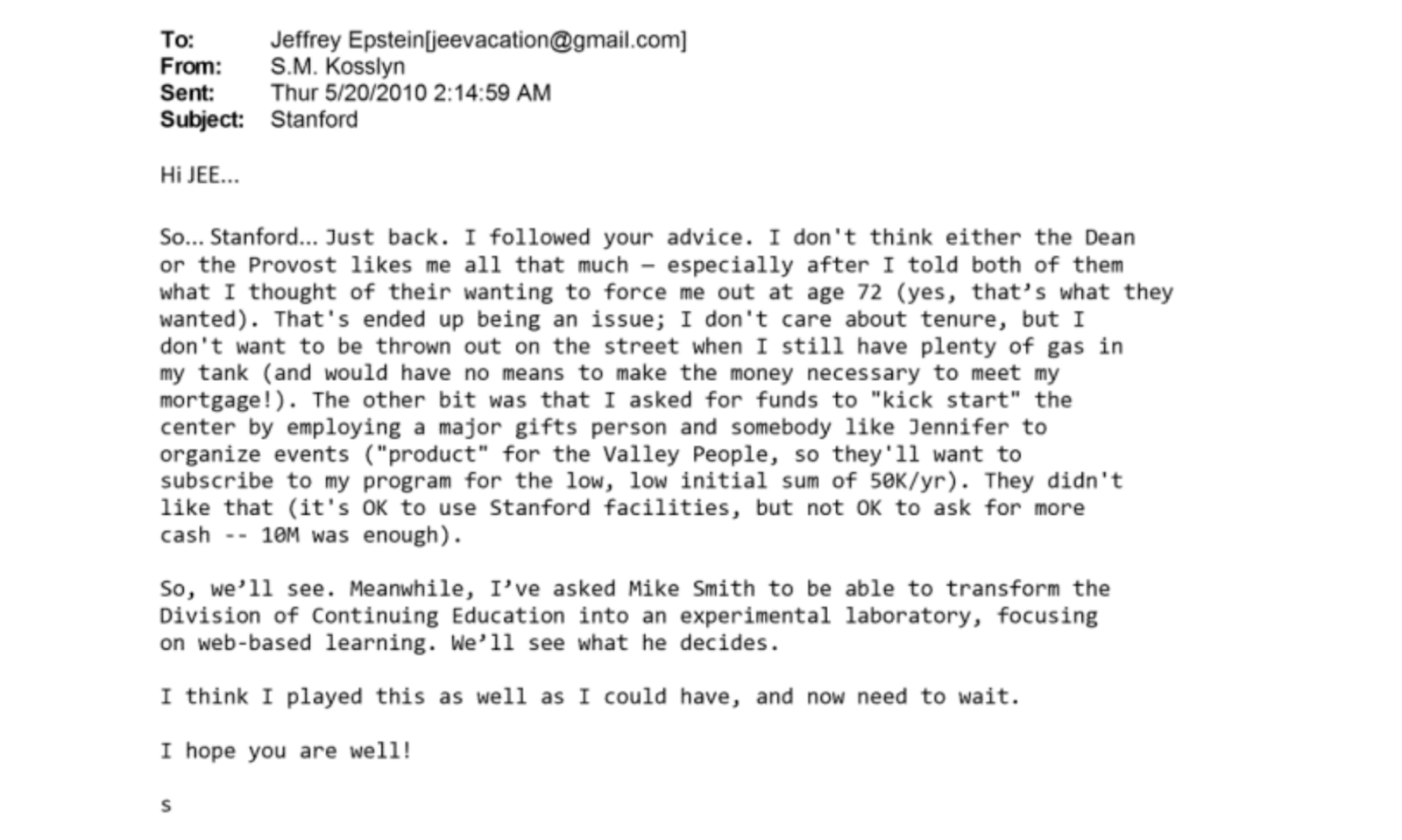
The relationship between Epstein and Kosslyn predated Kosslyn's appointment as the Director of Stanford's CASBS. In 2010, while Kosslyn was being recruited to leave Harvard and become the Director of CASBS, he was in contact with Epstein, who advised him on how to angle for the job. Part of Kosslyn's approach was to lobby to turn the "Division of Continuing Education into an experimental laboratory." This experimental lab approach is consistent with Epstein's plans for a behavioral science institute.
Later, Epstein followed up with Kosslyn on the hiring process. In response to Epstein's one-word email, "job?" Kosslyn reported that the "remaining issues concern autonomy, independence, and control," but that they were close to a decision. The issues were evidently ironed out; Kosslyn got the job.
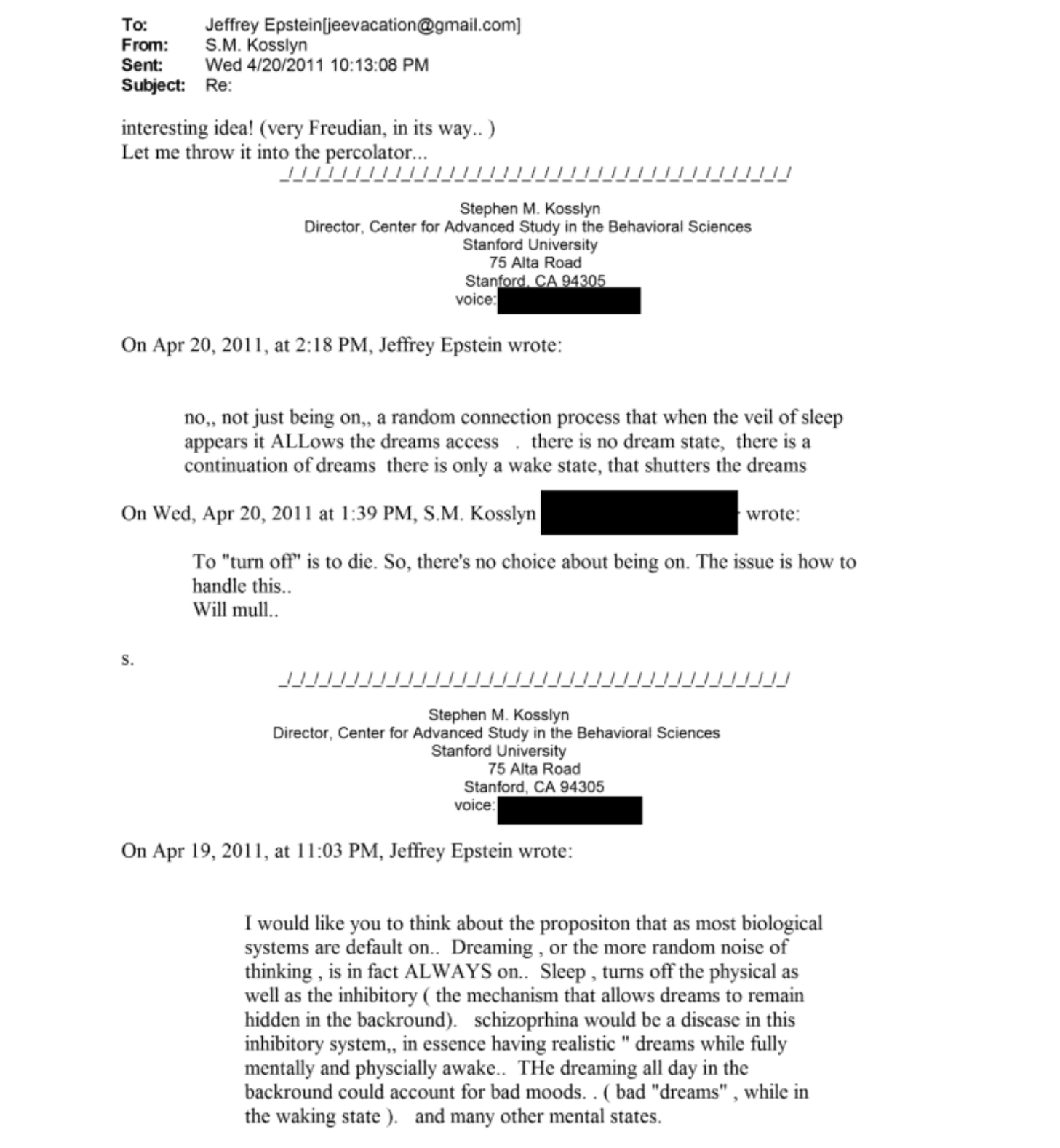
In the years following his appointment, Kosslyn regularly updated Epstein on his Stanford activities, coordinated private meals at Epstein's New York home, and planned dozens of private meet-ups around the country. In one email, Epstein posited one of his new theories on sleep, dreams, and consciousness. He wanted to discuss further with Kosslyn the idea that humans dream all the time, but when they are awake, those thoughts and visions lie in the background. Kosslyn called the idea "Freudian."
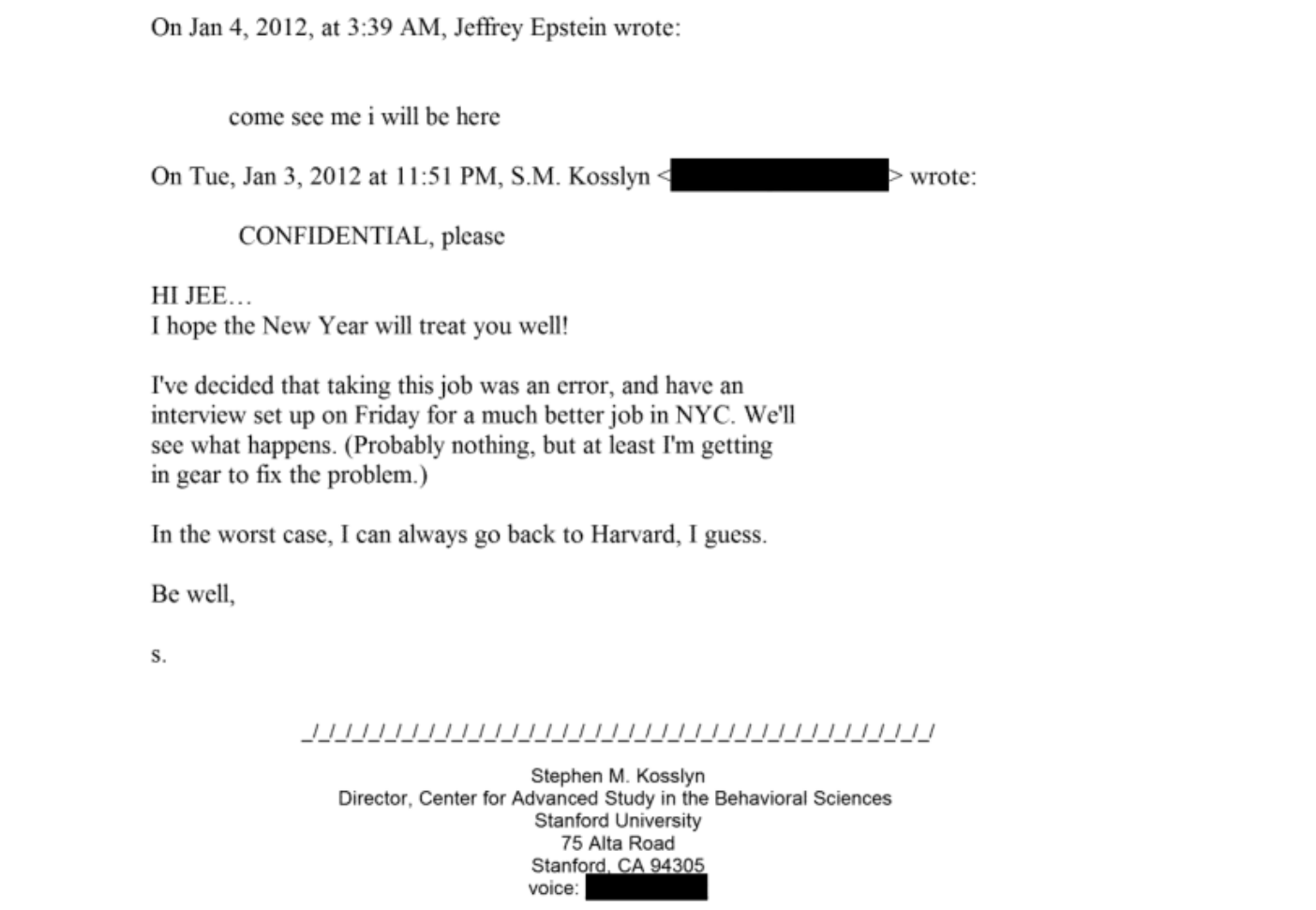
By January 2012, Kosslyn had soured on Stanford, calling his decision to take the job an "error." In February, he told Epstein he was a finalist to become president of the Social Science Research Council, an internationally acclaimed research institution spanning a variety of social science disciplines. If offered the position, he wrote, he would seek "to combine that organization with my current one," namely, Stanford's CASBS.

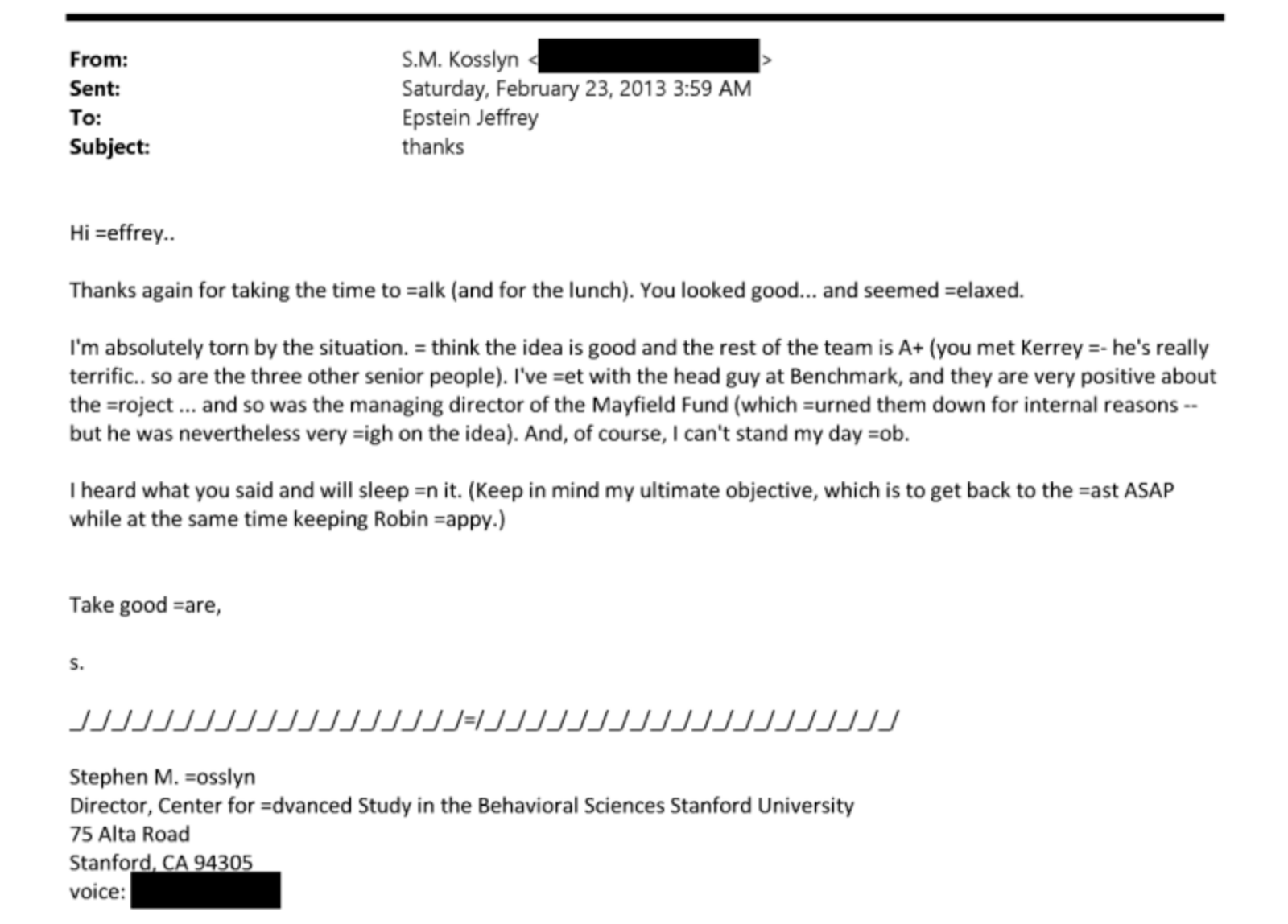
Epstein and Kosslyn continued meeting after Epstein's campus visit, including on a conference call with German cognitive scientist and AI researcher Joscha Bach. In February of 2013, Kosslyn emailed Epstein following a meeting with executives from the Mayfield Fund and the "head guy" at Benchmark to discuss "the idea" and the "A+" team they were forming around it. This was likely the subsequent development in Kosslyn and Epstein's plan for a behavioral engineering institute.
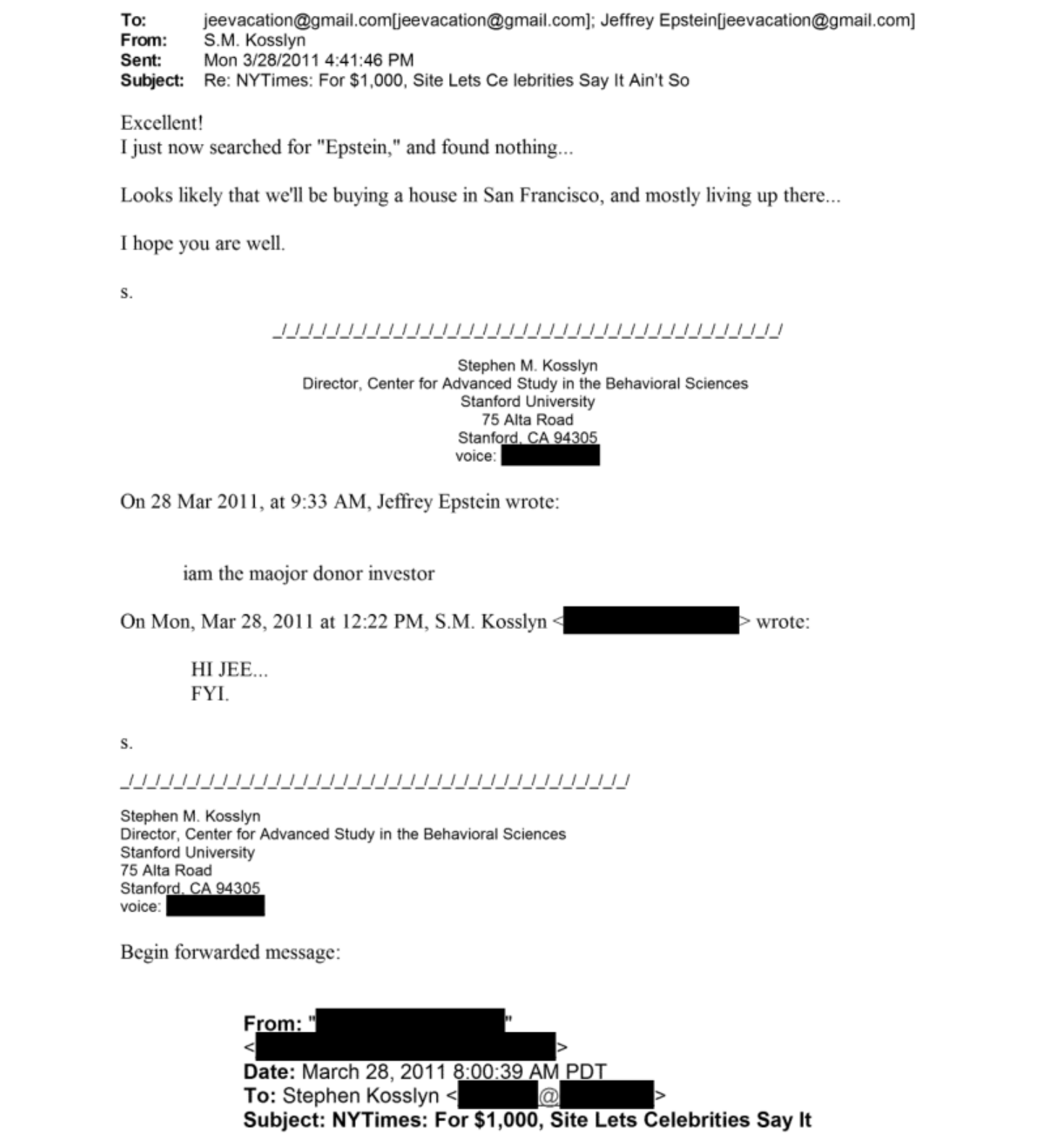
The Kosslyn-Epstein relationship extended beyond behavioral science. In March 2011, Kosslyn forwarded Epstein information about a reputation management service for celebrities. Epstein responded that he was an investor. Kosslyn then searched for Epstein online and confirmed that the services had successfully cleaned up his search results.
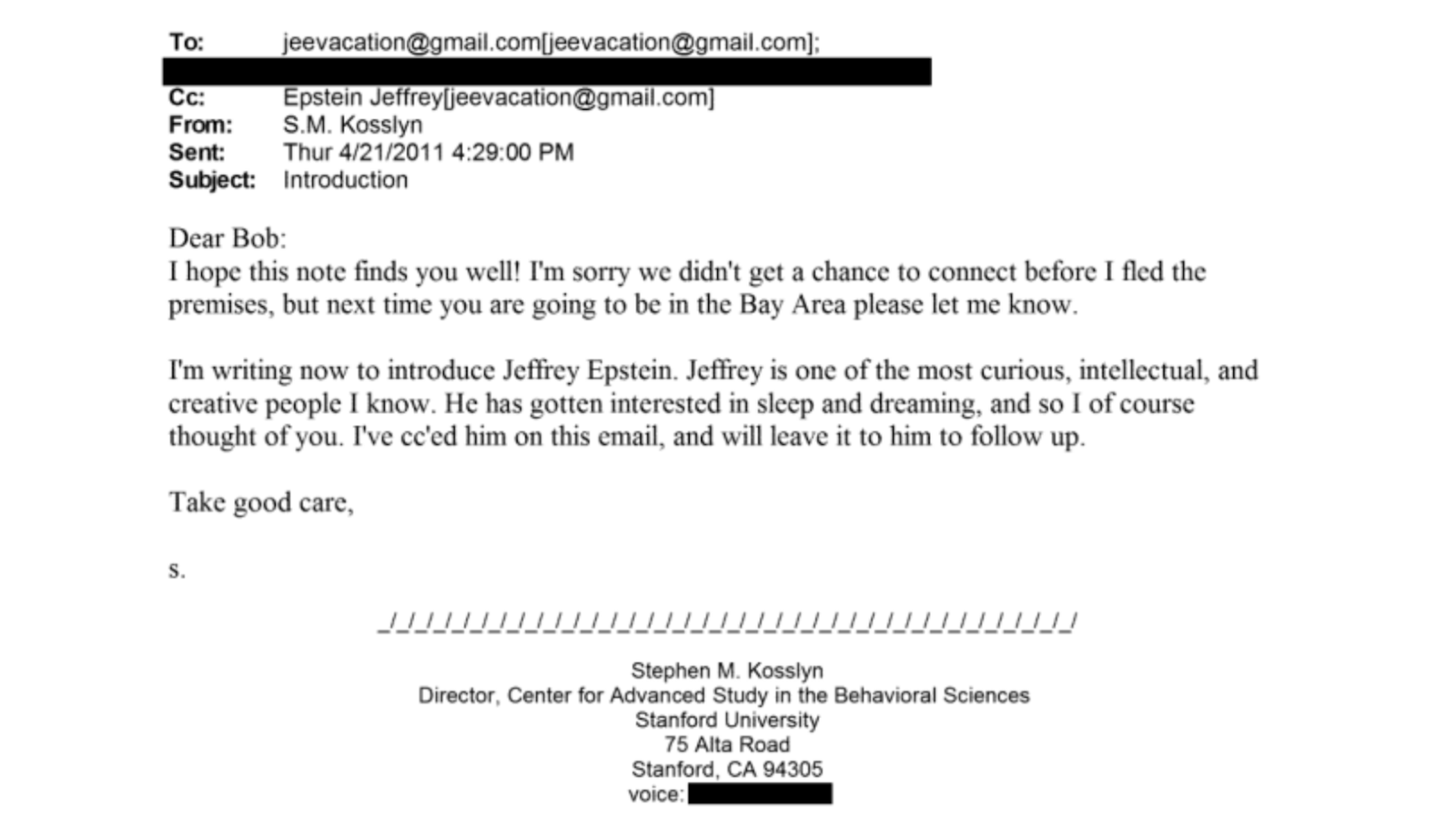
A month later, in an email introducing Epstein to a colleague, Kosslyn described Epstein as "one of the most curious, intellectual, and creative people" he knew.
Epstein's involvement with CASBS, his email to Merkin, and subsequent meetings with Kosslyn all indicate a coordinated effort by Epstein and Kosslyn in the fields of behavioral science and genetics. Epstein had a vested interest in Kosslyn's hiring at Stanford and worked closely with him during and after his appointment.
No "behavior engineering institute" exists at Stanford today, and Kosslyn's early dissatisfaction with the job suggests the project stalled. As director of CASBS, Kosslyn created several interdisciplinary fora, including the annual summit, which he invited Epstein to attend, and a summer intensive program. At the end of his tenure, CASBS launched the Mindset Scholars Network, which was discontinued in 2017. The Division of Continuing Education was never transformed into an "experimental laboratory," and Kosslyn departed after 2013.
Stanford maintains several behavioral science labs, including the Stanford Behavior Design Lab, the Social Sciences & Behavioral Nudges Research at the Graduate School of Business, the Stanford Behavioral Lab at the Graduate School of Business, and the Behavioral & Functional Neuroscience Lab (Wu Tsai Neurosciences Institute). The Stanford Review is committed to investigating Stephen Kosslyn's tenure at Stanford and whether Epstein succeeded in establishing some form of his institute elsewhere.
Why a convicted sex offender who operated at the highest levels of multiple industries was determined to engineer human behavior remains an open question. The Stanford Review will continue investigating Epstein's ties to the university.