Table of Contents
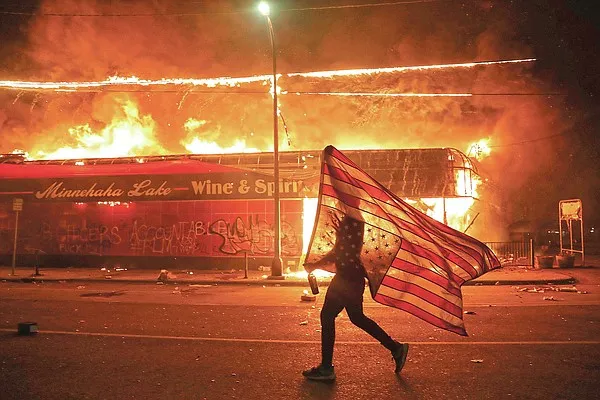
In May of 2020, I stood in my front yard in Minneapolis and watched flames consume an apartment building on Lake Street. The sky glowed orange, and smoke from burning tires clung to the air. I was fifteen and terrified. My high school was on that street. My house sat across the Mississippi River from Cup Foods. I did not choose to grow up at the epicenter of the George Floyd riots, but I did. By the time my family fled in 2022, violent crime and mass immigration had made my city unrecognizable. My family had called Minnesota home for generations, since they first arrived in this country. Somewhere along the way, it stopped feeling like ours.
I came to Stanford hoping distance would bring normalcy. It did not. After my freshman year, a CCP agent targeted me. He posed as a Stanford student, reached out through social media, and referenced details about my life I had never disclosed to him. He tried to recruit me. Experts later confirmed he had been posing as a student for years, targeting women researching China-related topics. That experience became the foundation of my investigation into Chinese academic espionage at Stanford—the most-read article in the Review's nearly forty-year history. The FBI later informed me that I was and continue to be monitored by the CCP on my college campus, classifying it as transnational repression. I put my life and my family's at risk for this cause.
Then last week, I opened X and watched Don Lemon berate a pastor as protesters stormed his church, children crying and clinging to their fathers. The pastor was the man who baptized me. The church was Cities Church, which held its founding meetings in my living room. Now the community, one that formed my entire childhood, is at the center of a federal investigation. Through much denial, I have finally come to terms with the reality that the Minnesota I once knew no longer exists.
I share these details only because I think they explain why the Review matters to me in a way that feels personal. My life has been bizarre in many ways, but it is not exceptional. It is a microcosm of the plight of my peers. Many young Americans have grown up watching the places they come from become symbols for problems they did not create. We watch institutions fail to protect us. We have learned, too young, that those wielding power do not always know what they are doing, and perhaps do not even care to preserve anything for the next generation. And we have had to decide what to do with that knowledge.
Some people in my position become cynical and disengage. I joined the Review. I started writing for this publication in my first quarter at Stanford. I knew the risks of being publicly conservative, and I did lose friends. But I saw the Review as an organization that was really willing to do the work that other organizations wouldn't.
Writers here have exposed how Stanford's administrative bloat costs students millions of dollars. They have documented the gap between what the Hoover Institution fronts to donors and what it actually does. Investigative journalism requires people who ask real questions and are willing to dedicate hours of free time to improving their environment. It needs sources who trust you and editors who will back you up when people and institutions push back. It requires a genuine belief that the truth matters, even when that truth is inconvenient.
I want this volume to carry that tradition forward. But I also want to be honest about what motivates me.
I have many opinions. I believe that universities have become bloated and unaccountable. I believe that foreign adversaries exploit our openness in ways we are too polite to discuss. I believe that the politically apathetic attitude at Stanford reflects the nihilism and malaise that my generation carries. The Review has always been an essential outlet for these views. But I also believe that the Review is strongest when it prioritizes evidence over ideology. The articles that have mattered most in our history are not the ones that confirmed what readers already believed. They are the ones who revealed something irrefutable and new. This is the work that forces a response. It is our only hope for change.
I am aware that the Review has a reputation. Some of that reputation is earned, and much of it is caricature. I have no interest in being inflammatory for its own sake. Provocation without substance is boring. What interests me is the kind of journalism that makes powerful people uncomfortable because it is true.
The staff I am working with on this volume gives me great confidence. They are serious about getting things right and incredibly intelligent. They are willing to make sacrifices because they believe this work matters. For many of us, the decision to publicly associate with the Review is challenging but more rewarding than anything else.
I grew up in a place that burned. A foreign intelligence operation targeted me before I turned twenty. The church that baptized me is now a national news story. None of this is normal. But I suspect that my generation's relationship to abnormality differs from that of previous generations. Rather than the stability we should have been provided, we encounter disruption at every turn. The question is whether we will be passive recipients of that disruption or take action.
The Review is my answer. We are small, but we are effective. And in a world that often rewards performance over substance, effectiveness is rarer than it should be.
I am honored to lead this publication. I am grateful to former editors-in-chief Abhi Desai, Julia Steinberg, Josiah Joner, and Walker Stewart for their ongoing mentorship and for believing in me since the beginning. I am grateful to the alumni who have built this institution over nearly four decades and continue to support our mission.
My hope for this volume is to do real journalism that is impossible to dismiss. That is the work that justifies the sacrifices we have made to be here.
Our lives have led us here. The future of our institutions demands this. We intend to deliver.
Fiat Lux,
Elsa Johnson
Editor-in-Chief, Stanford Review Volume LXXI