Table of Contents
As winter quarter comes to an end, campus feels quieter than ever.
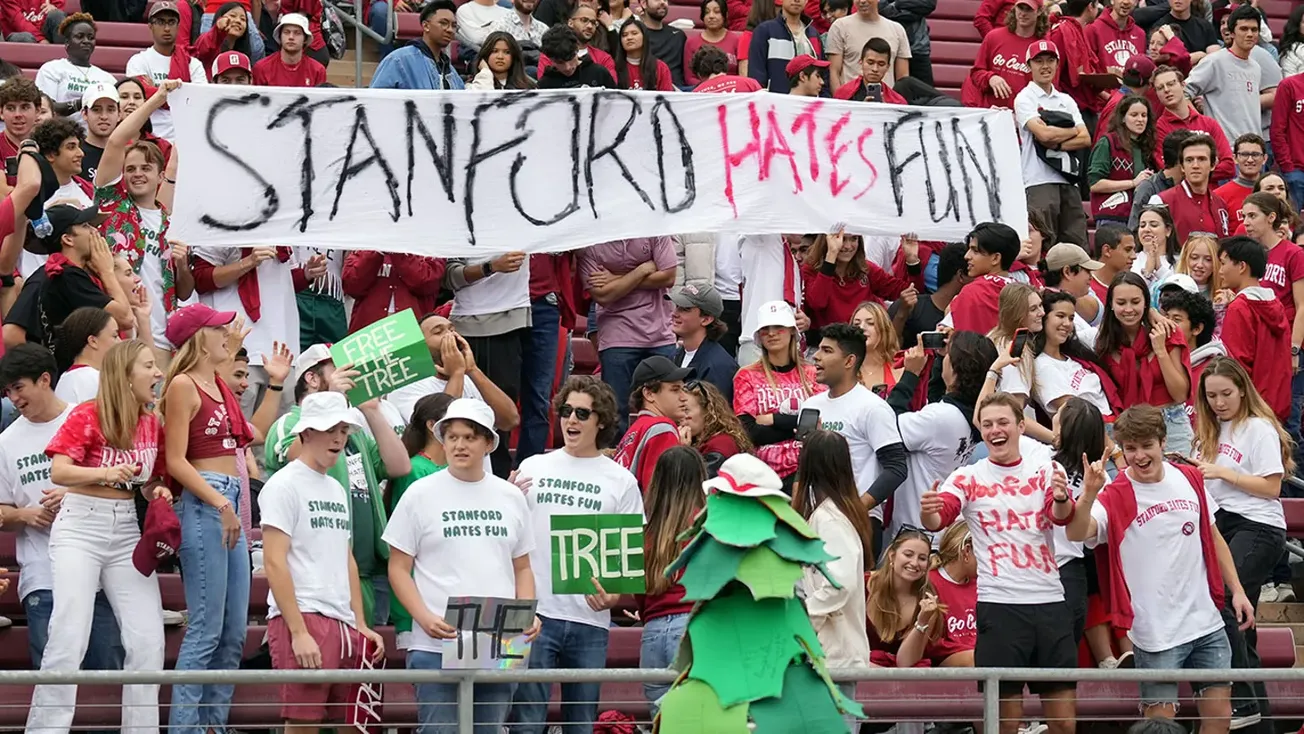
Stanford cancelled EuroTrash, the Kappa Sigma blowout that freshmen have been hearing about since before they arrived on campus. They also cancelled White Lies, Sigma Phi Epsilon’s signature all-campus party. This year, parties occurred less frequently than ever before, and when they did, they were often shut down.
“It’s such an ingrained part of the culture that you can just make reference to EuroTrash,” one student in the Class of 2029 told the Stanford Review. However, he and the rest of the freshman class never got to experience EuroTrash. The events that characterized Stanford’s golden age are fading into myth for the Class of 2029, and perhaps even for the Class of 2028. Social traditions unique to Stanford are no longer observed, but are remembered as part of an era that feels increasingly out of reach.
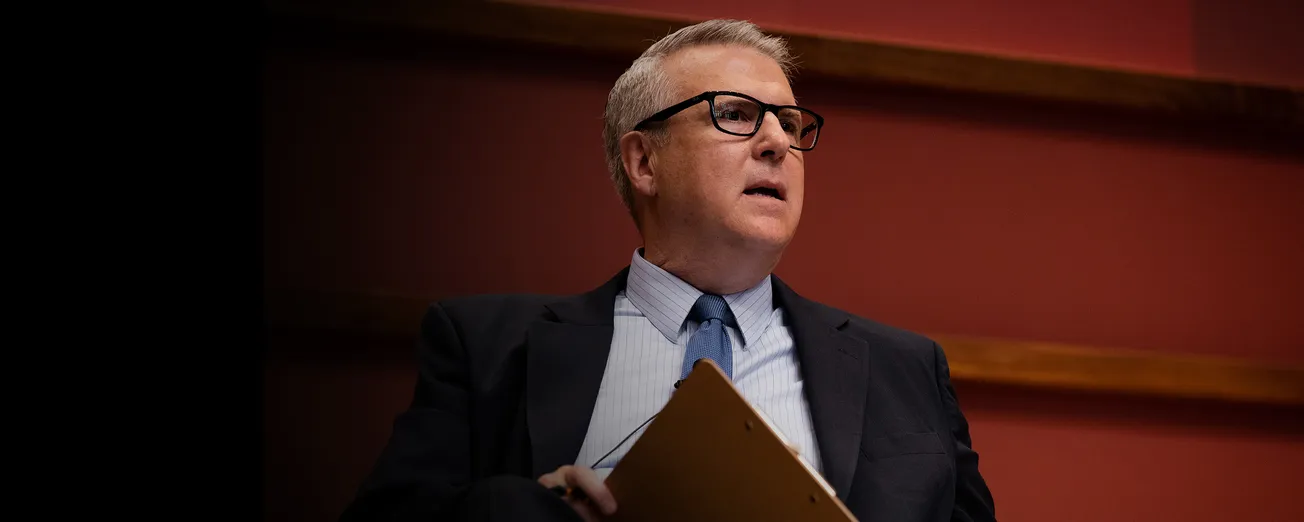
A methodical, years-long campaign by Stanford’s administration is regulating, restricting, and ultimately extinguishing the social culture. And presiding over the wreckage since September 2024 is Michele Rasmussen, Vice Provost for Student Affairs. Rasmussen oversees an incredibly consequential administrative office whose decisions shape the daily lives of over 7,000 undergraduates. Before coming to Stanford, she spent her entire career as a student affairs administrator. Her previous position was as Dean of Students at UChicago, a school so thoroughly associated with social bleakness that students wear t-shirts bearing its self-proclaimed motto: The place “where fun goes to die.” Whether or not Rasmussen had any hand in that reputation, she comes to Stanford as a veteran administrator of a campus that turned institutional joylessness into a badge of honor.
Every student interviewed for this piece asked to remain anonymous out of fear that their fraternity would be targeted by VPSA. At an ASSU Town Hall meeting on January 21, 2026, Michele Rasmussen, when asked about the dysfunction within her office, responded, “VPSA is a huge organization on which I am by no means a subject matter expert.”
One ASSU member who has worked closely with VPSA was unsparing. “[Rasmussen] will say, ‘I don’t know,’ when undoubtedly she’s the only person in the room who should know, and who in reality, does know.”
According to Alumni, students, VSO leaders, and Greek life members, Rasmussen begins with deflection, routes concerns into other corners of VPSA, and watches initiatives die on the vine. “She has weaponized her incompetence in order to basically prevent students from getting their questions answered,” the ASSU member said.
The most visible symptom of Stanford’s social decline is the shrunken party scene. But the root cause runs deeper, and it runs directly through the decisions (and deliberate inaction) of Rasmussen’s office.
At present, Stanford has five housed fraternities, soon to be six with the reinstatement of Sigma Chi at 550 Lasuen. Given that several of these fraternities are under investigation or on disciplinary probation, the number of organizations willing and permitted to host all-campus events drops to one or two. The entire student social population, numbering in the thousands, congregates in whichever house is left standing. Capacity is breached, medical transports spike, and the administration responds by punishing the fraternity that hosted. The cycle repeats.
The undersupply of fraternity housing compounds the problem. According to a student in fraternity leadership, fraternities want to extend additional bids for new members, but they do not have the housing to do so without compromising the internal accountability structures that keep houses functional and safe. A housed fraternity can realistically sustain healthy operations with roughly 70 members; however, when numbers exceed that threshold, events become unmanageable. As a result, the risks that the administration claims to be mitigating are produced by the shortage itself.
According to fraternity members interviewed by the Review, the solution to this problem is simple: house more fraternities. Stanford has the capacity, and workable proposals have been presented to Rasmussen. Yet pursuing a solution requires her to reverse prior decisions, and doing so would make her look bad.
“She’s so obsessed with optics that she will not do what is actually right by students,” said one source, familiar with the internal deliberations.
The downstream effects of the lack of parties are showing up in Stanford’s freshman dorms. Freshmen are drinking in the dormitories at alarming rates in unregulated, closed-door environments with no safety infrastructure. Rasmussen reportedly said it was the first she had heard of this. Many who were present found that response difficult to believe.
“With this denial of access,” one freshman explains, “students think it’s their time to have fun, they’ve worked for long enough, they want to have fun, but they have no place to do something. And that is where you get dorm parties. That is where you get very rowdy pregames. That is why you have all these things just popping up on their own.”
Dorm parties have no sober monitors. No professional security at the door. No barricade, no medical protocol, no accountability structure of any kind. Through its own enforcement posture, the administration has driven student social life away from the most regulated environments on campus and into the least regulated ones. It then professes ignorance of the results.
With most fraternities sidelined, singular all-campus parties absorb the full weight of student demand. Students arrive not expecting a normal party. They arrive expecting an event of historic proportions. “Instead of imagining one party instead of five of equal sizes, [students] are now thinking it’s one [party] the size of five,” a student commented. “You have a bunch of people going into [a frat] thinking it’s going to be a big event, and therefore preparing for it as if it’s going to be this party to end all parties.”
Regarding Halloweekend — an all-campus function that was infamously chaotic for allegedly having a strikingly high number of transports — the University clarified that the total number of calls was not statistically unusual for a weekend. This statement was technically accurate and entirely beside the point
The issue arises when all partygoers on campus concentrate in one fraternity house. The administrative policy yields the opposite of the desired effect; rigorously restricting parties leads to more explosive one-off events.
“It’s not their fault,” a student said of the hosting fraternity. “They’re trying their best to maintain the safest environment that they can. But the behavior of the students who go, compounded with the fact that there’s only one party… It’s just bound to be a big disaster.”
Fraternities are required to take responsibility for who enters their house, but they cannot control what a student has done or taken beforehand. The Good Samaritan clause in Stanford’s Student Alcohol and Other Drugs Policy is supposed to offer protection in situations like these, but fraternity members report that its practical scope is opaque and its protections unreliable. “The university is not super transparent about Good Samaritan policies,” a member of a housed fraternity shared. “We’re supposed to report if there’s a student who needs medical attention and help them as much as we can, but there are often consequences to doing the right thing.” The ramifications of seeking medical aid remain, in the minds of many members, unclear enough to create hesitation.
“It’s reminiscent of American bureaucracy, this mindset of ‘It doesn’t matter what your intention is, you have to be responsible for the outcomes.’ Which is probably true, but it’s certainly overdone with this overlegalization of the processes,” a student said of the Stanford administration.
The result, as another individual observed, is a campus full of students who are not deterred from seeking fun. They are simply redirected to environments that the administration pretends not to see. “There are parties and pregames that have occurred all over campus, not just at frats, purely because people wanted something to do and were being denied their fun.”
The administration has not created a safer campus. It has choked the vibrant life from Stanford and swept the dangers under the rug.
This is the system Michele Rasmussen now oversees and, by her inaction, sustains. It is a system in which the number of theme houses can only continue to decrease, where co-ops, fraternities, and residential communities with character slowly disappear, replaced by student housing with no identity and no social function. A system in which freshmen drink in dorms because there is nowhere else to go, and the Vice Provost pretends to learn about it from a student in a meeting. Where an unhoused fraternity is told they cannot proceed with the process to be housed again because it would require the Vice Provost to revisit a prior decision. Where students asking legitimate questions are met with “I don’t know” and “we’re working on it,” and then never hear anything again.
The Row used to be entirely Greek. Stanford now has five housed fraternities. The theme house system is eroding, the co-op model is under pressure, and the residential culture that generations of students built is being replaced, piece by piece, with a more manageable, more monitorable, more liability-conscious institution. One optimized not for student flourishing, but for administrative convenience. The Farm, once among the most distinctive and vibrant campuses in American higher education, continues to grow a little quieter.