Table of Contents
“It is certain in theory, that the only moral foundation of government is the [agreement] of the people, but to what an extent shall we carry this principle? Shall we say, that every individual of the community, old and young, male and female, as well as rich and poor, must [agree] to every act of legislation?”
— John Adams, 1776
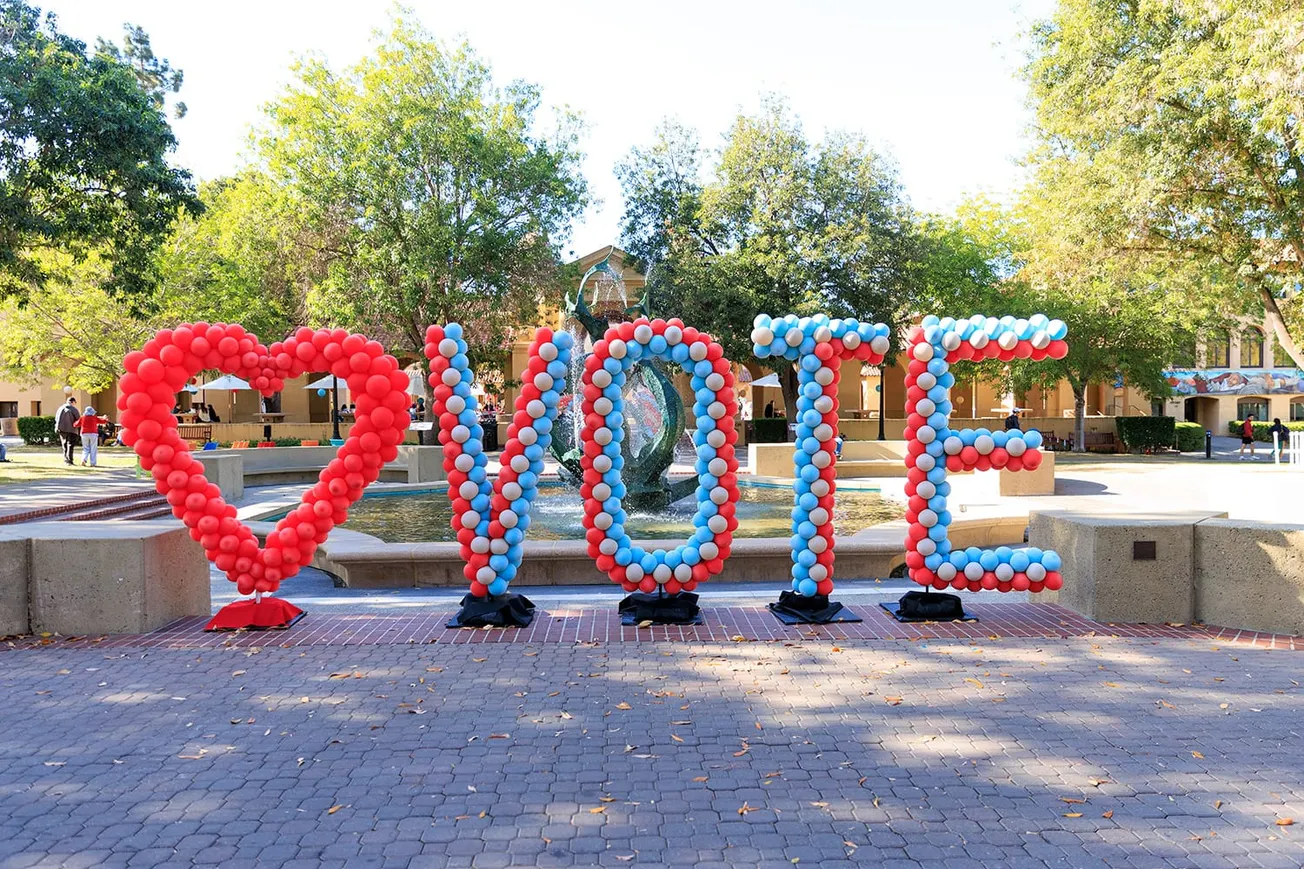
It is Democracy Day at Stanford. We do not get a day off of school for Indigenous Peoples’ Day, which is a slap in the face to the scalping civilizations that built this country. Instead, we get to worship the obelisk of government.
The most blasé opinion among modern Americans is that we live in a “deeply polarized society.” It seems to be the one thing that everyone agrees on. But in reality, there is much common ground so deeply ingrained that it is rarely questioned. One such case is our democracy.
For a full decade now, the attack lobbied most heavily against Donald Trump from the left is simply that he is “a threat to democracy”. And it is not only Democrats who use democracy as a benchmark. JD Vance, in his address to the Munich Security Conference last year, noted that “Democracy rests on the sacred principle that the voice of the people matters.” Even Trump, defending himself from Democrat attacks, said at a rally, “I'm not a threat to democracy. I'm the one that's going to save democracy.”
America was not founded as a pure democracy; of course, we live in a republic, and we have an Electoral College. But this is not really what the topic of conversation is about.
The current American ideal of Democracy is that everyone gets a say. More concretely, everyone gets a vote. And this is not only ahistorical but also illogical.
While it is now widely regarded as a universal truth that the ideal form of government is one in which every adult has the right to vote, the first time such a policy was adopted was in Finland only 120 years ago. Clearly, universal voting is not an intuitive and foregone conclusion.
The founders of America certainly did not think so, as the early republic mostly only allowed land-holding white males to vote. In contemporary society, universal voting is viewed as a good and natural development of such an antiquated system. But that assumption is not correct.
In fact, the systems of old were far closer to being correct than current ones.
Voting has been classified as an essential human right. If voting is a necessary part of human dignity, then certainly “preventing” someone’s vote is classifying them as subhuman. In reality, voting is not an act of human existence, but rather a participation in the political process.
The political process, of course, is not simply voting for people in positions of power. The Greek concept of the polis, which gave us the concept of the political, encompassed the entire ecosystem of public life, including, but not limited to, law, business, war, and, of course, governance. When determining who should be involved in the political, none of these can be separated from the whole. So who ought to be active members in the polis?
Not being active in the political process is not necessarily negative. Historically, women have been among those excluded from the political sphere. This was justified because including women was viewed as rejecting the differences between men and women, fundamentally disrespecting their value.
Women’s social reformer and advocate for working mothers Josephine Jewell Dodge framed the anti-suffrage movement as a defense of women’s rights.
“The voting woman has retained most of the special rights and exemptions accorded her under man-made laws, while she has failed to discharge the obligations which the voting man assumes with the elective franchise. The vote of the man is a sort of contract to support the verdict of the ballot box, if need be, by the jury box, the cartridge belt, the sheriff's summons. The voting woman is exempt from these obligations. She is a privileged voter. While she may have political power, she does not have political control. Stability of government demands that the control of government should remain in the hands of those who can be held responsible for results.”
While women now have the right to vote, not everyone should be guaranteed access to the political sphere. Part of deciding the affairs of the polis requires having a stake in it. This, of course, applies to wealth and assets. But even more importantly, having a family creates an inherent commitment to the future of the society. A married man with a family makes decisions based on the future of his family, while a bachelor does not. This is why Sparta required marriage and Caesar Augustus economically incentivized it.
Those who choose their own present pleasure over fostering future generations reject their obligation to contribute to the polis, and therefore forfeit their privilege to vote.
There are also many other groups in America that are simply not prepared to participate in political life. People who are clinically mentally ill or on mind-altering drugs, are detached from reality and unable to make decisions for themselves, let alone others. The over 20% of American adults who are functionally illiterate and the 58% of them who cannot pass a basic civics test are too ignorant of American politics to make judgments of referendum upon it.
For example, people on welfare are not economically integrated into society. Depending on the state, the average American on welfare can receive anywhere from a few hundred to more than a thousand dollars a month in cash, not to mention healthcare through Medicaid. This is not a referendum on their personhood, but merely an acknowledgment that the right to vote should belong to those who have a meaningful stake in our nation's future, contribute to it, and bear some responsibility for the consequences of its fiscal decisions. Those who do not meet these qualifications should not have political authority.
As John Adams put it in 1776:
“Is it not equally true, that men in general in every society, who [are poor and do not own property], are also [unfamiliar] with public affairs to form a right judgment, and too dependent upon other men to have a will of their own? …Few men, who have no property, have any judgment of their own. They talk and vote as they are directed by some man of property, who has attached their minds to his interest.”
The debate around voting rights has always been one fueled by deep anxieties about equality and the unfair distribution of political power. The conversation has become one of entitlement. However, social and political distinctions are necessary to preserve order. Without them, we live in a world where someone who lives off of taxpayer dollars can mail in a ballot demanding more benefits without bearing any of the costs themselves.
Adams anticipated this:
“There will be no end of it. New claims will arise. Women will demand a vote. Lads from 12 to 21 will think their rights not enough attended to, and every man, who has not a [dime], will demand an equal voice with any other in all acts of state. It tends to confound and destroy all distinctions, and [surrender] all ranks, to one common level.”
We have reached the common level; and the result is a country that the founders could not have imagined. Every divisive issue of our day stems from a war between distinct demographic groups. Every election cycle is determined by a referendum on a list of issues important to various minority and oppressed groups. Gender and class wars all stem from a fundamental misunderstanding of the political sphere. Politics should be reserved for a very small and specific group. Adams understood this; early thinkers did too, and yet we think that by extending the vote to all, we have thrown off the shackles of thousands of years of civilization.
We are quickly finding out that the distinction between peoples is the bedrock of an ordered society.