Table of Contents
A few weeks ago was Valentine’s Day. This year, more than ever before, young people spent it alone. According to University of Chicago researchers, over half of men and women aged 18 to 34 are single. Dating and sex are reaching notable lows among college students, and birth rates continue to plummet in the US and across the Western world.
The problem with the modern world of dating is that it is unserious, unpurposeful, and fully mishandles the hierarchy of priorities. Specifically, the problem with dating is dating itself. We live in the inevitable conclusion of a modern dating culture.
Therefore, the conservative propositions of “practice” dating, co-ed religious mixers, or swing dances are not the answer. Instead, it is something far more traditional than even conservatives want to consider. The answer is arranged marriage.
For most people, arranged marriage is a third-world, archaic, fundamentally illiberal concept. It is viewed only as culturally Indian, often barbaric, and something that societies used to perpetuate caste systems.
Despite its various connotations, arranged marriage is simply the institution where families and communities find and recommend spouses for their children, who then engage in supervised, time-constrained courtships.
But arranged marriage is not exclusively Indian or even Eastern. For thousands of years, European families at all levels of society would decide together to approve a union that would be mutually advantageous, transferring wealth and ensuring the physical protection of both sets of progeny. Furthermore, arranged marriage is not necessarily forced, though that is its caricature in today’s West.
Instead, arranged marriage has history on its side because it addresses the structural barriers to finding a spouse. The logic of arranged marriage is almost syllogistic. The purpose of courtship is marriage. The purpose of marriage, spiritually, is for spouses to help each other and their children to attain holiness and reach Heaven. From a worldly standpoint, marriage is essential for starting families, which are the Aristotelian building blocks of society. With that in mind, spouses must be aligned on a common worldview, which includes faith, morals, and often shared culture and educational backgrounds. Attraction and compatibility are important, but seeking them without the aforementioned is a recipe for “drifting apart.”
In most cases, people’s families understand these issues better than they do themselves. In an issue as emotionally charged as dating, a family can provide the objective and non-emotional input needed to find a suitable partner.
One example of a Christian push to reinvigorate dating is The Dating Project. The experiment turned documentary reintroduced the concept of casual dating and dating skills to help young people find spouses and end the cycle of hookup culture. The goal is admirable but misguided, because dating habits do not address the structural problem.
That is because there is actually nothing “traditional” about dating. Contemporary dating began in the late 1800s. The romanticized courtship of old always began with familial approval and vetting. At no point in history did any society expect the future of its people to depend on throwing its young teenagers into the hostile wilderness to find a mate. Therefore, creating good dating practices without the bedrock of courtship is, at best, a duct-tape solution to a structural problem. At worst, it is a grand waste of time en route to the same lonely result.
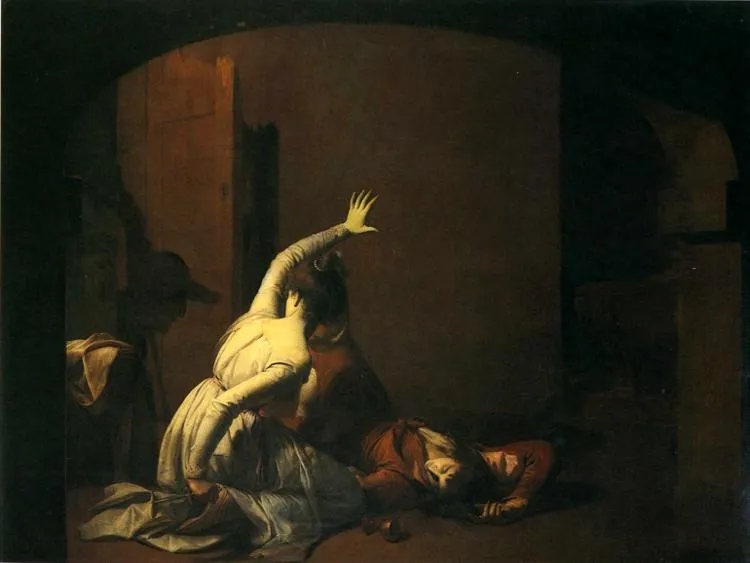
The idea of arranged marriage seems so foreign to us because defying parents in the name of love is Hollywood’s most popular theme. Our world is Romeo and Juliet turned on its head.
In Shakespeare’s play, Romeo and Juliet’s deaths are fitting because their disobedient choices to serve themselves have necessary consequences. Our society, instead, glorifies the star-crossed lovers, the “Romeo and Juliet”. The High School Musical series, one of the most popular childhood franchises for Generation Z, follows a girl and a boy who fight the odds in their respective social spaces with a classic love-conquers-all finale. How preposterous. Love Story, Taylor Swift’s famous song with over a billion streams, also draws on the Romeo and Juliet narrative. She is Juliet, her boyfriend is Romeo, and they live “happily ever after.” A generation of Americans has grown up on the fantasy that love always wins, even when the odds and your community are against it.
Now, this also happens to be a generation of Americans who are less happy, more suicidal, dating less, getting married less, and having fewer children than ever before. Perhaps this is why Stanford’s Date Drop and Marriage Pact, which filter based on worldviews, are getting so much attention. Even Silicon Valley wants to arrange marriages.
The turn to arranged marriage does not need to be drastic and painful. It starts with familial input, continues with short, purposeful courtships, and hopefully ends in a strong marriage. Everyone wants to find “the one.” People just need to realize that arranged marriage drastically increases that chance.
So, maybe next Valentine’s Day, call up your mom or your dad, and tell them, “Set me up.” What feels like giving up your freedom may just be your ticket to happiness. We guarantee that nothing will make them happier, and future generations may just depend on it.