Table of Contents
Last fall, Stanford’s most cherished social traditions were targeted and taken down by university administration. EuroTrash, the infamous first party of the year hosted by Kappa Sigma, was cancelled, as was Sigma Phi Epsilon’s annual White Lies party. Others were pushed to later quarters. The result was one party on a given night with a crowd the size of five parties packed into it.
When all the parties were cancelled and nearly every fraternity was placed on probation, freshmen resorted to drinking unsupervised in their dormitories. Bluntly put, social life at Stanford was dying.
This fall – at least so far – is different. For the first two weeks of the year, every one of those “traditional” parties was allowed to run with impressive support from Stanford administration.
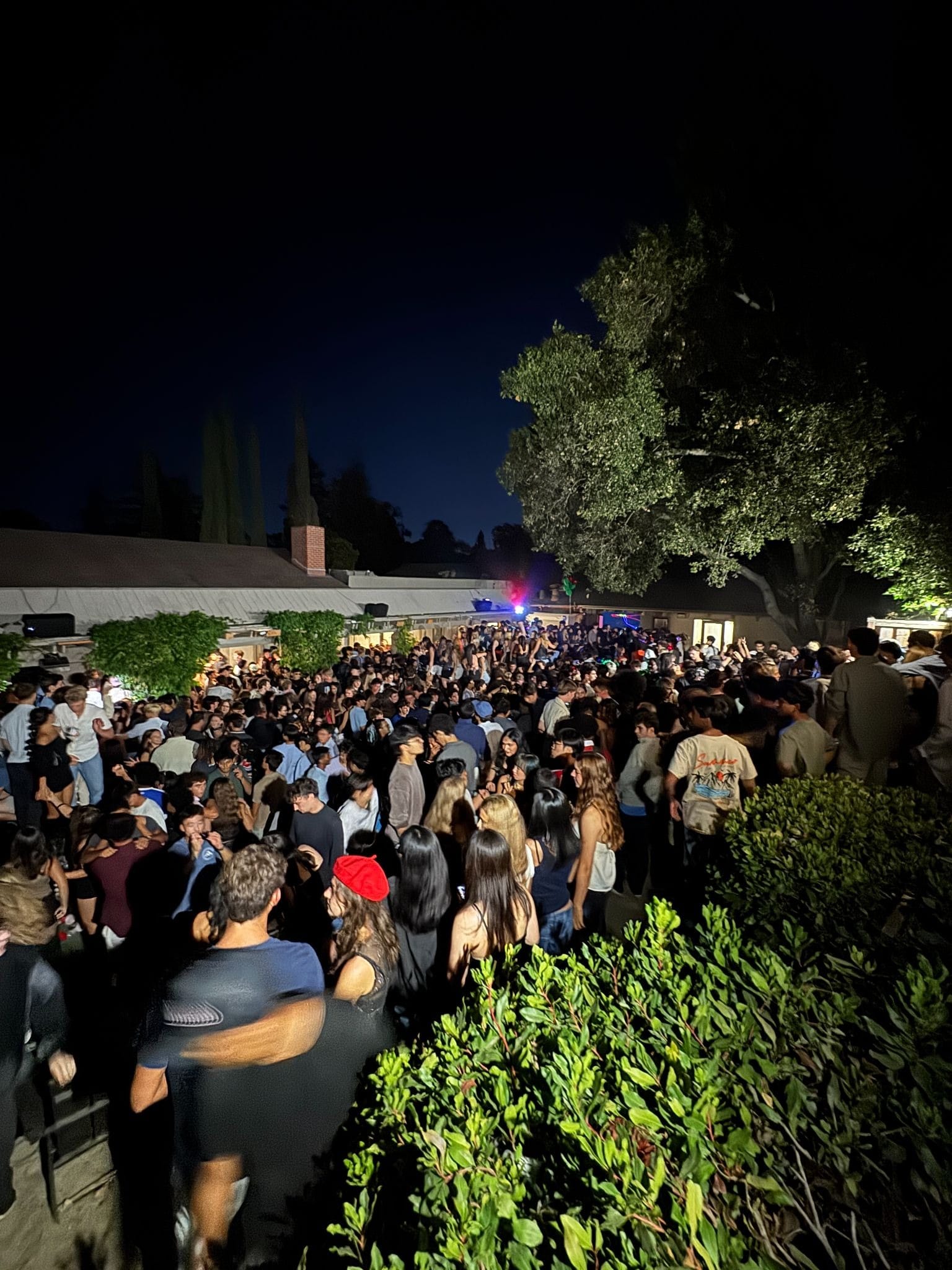
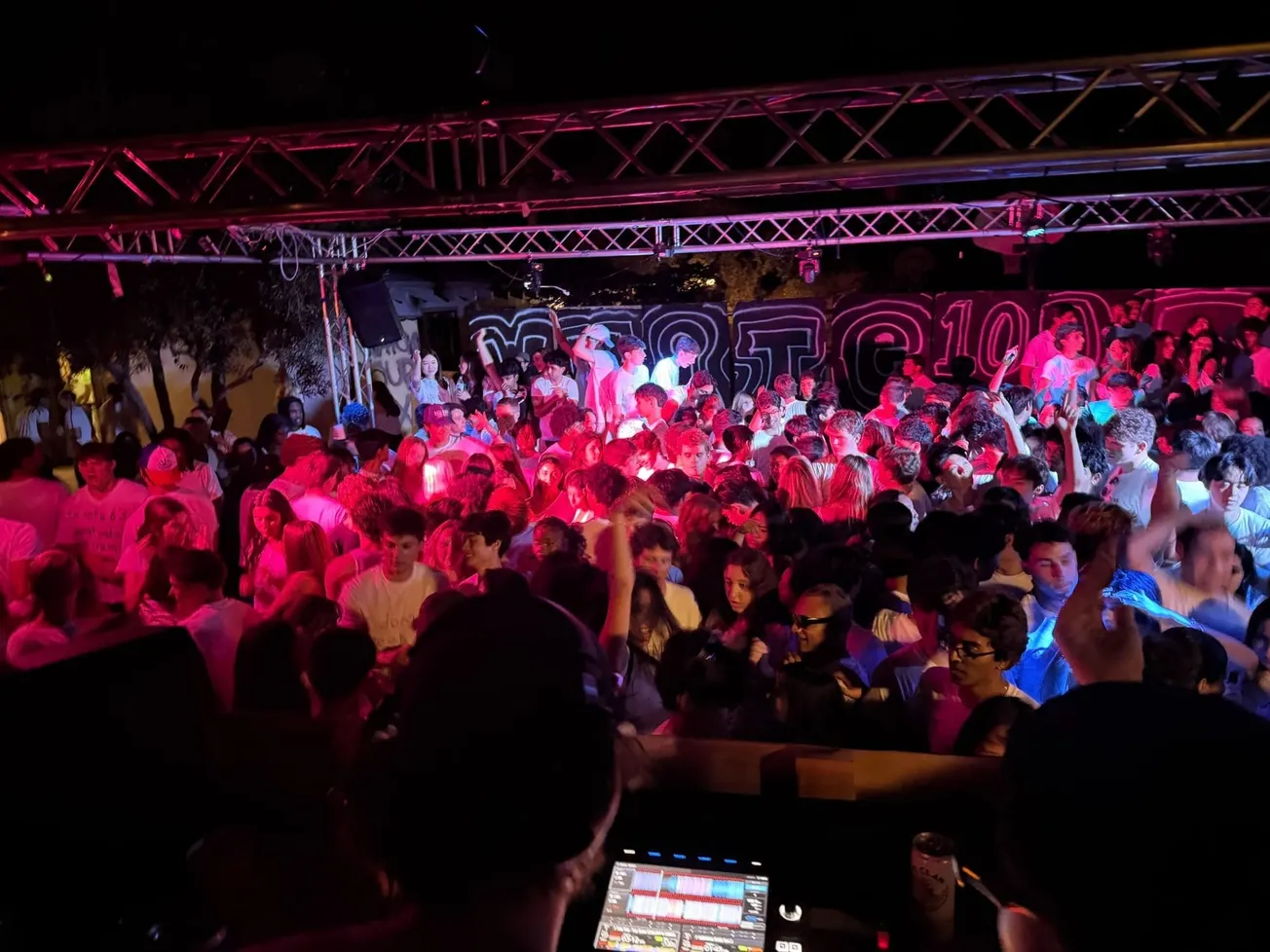
Kappa Sigma, EuroTrash (2026)
The first party of the year is always the most volatile. Freshmen arrive with four years of expectations and no sense of their own limits, which is why they always make up a disproportionate share of the transports from EuroTrash in particular.
A member of Kappa Sigma shared with the Review that according to the sheriff and Stanford police who shut down the party, twenty-one students were transported on the night of EuroTrash. “None of them were inside Kappa Sigma or required us to actually remove people from the house,” he said. “It was all people that were on the way to the party, or we turned away from the party, or were outside.”
EuroTrash was shut down by Stanford police at 11:45 p.m. due to the number of transports that night. “If there’s enough transports above a certain threshold, [police will] shut down all parties on campus,” a representative from the Interfraternity Council told the Review. The IFC member explained that when a sober monitor, RA, or on-site EMT makes a call for an ambulance, the police get connected and keep track of transport numbers. “It’s usually a judgment call between police and fraternity leadership. Oftentimes the police are the ones who are going to be more restrictive in making that decision.”
Kappa Sigma says its preparation earned the fraternity credit, and based on how the night went, they would not be blamed for the high transport numbers. “At least from a liability perspective, the sheriff was like ‘You guys crushed it, that’s great,’ and we were pretty happy because we put a lot of effort into making sure things were safe. We had four thousand water bottles, five porta potties, a taco truck, like everything.” The member also told the Review that the university supported the fraternity by paying for barricades and security, which helped students running the party turn away anyone so intoxicated that they would become a medical liability.
Kappa Sigma points to their own preparations as evidence that the problem is not the fraternities. “It sounds like it’s not a EuroTrash problem, or a party problem, it’s a freshman class at Stanford drinking for the first time problem,” the Kappa Sigma member stated. “Because that’s an absurd amount of transports. It’s ridiculous.”
Under last year’s administrative conditions, the same fraternity would have been trying to manage a crowd it was not permitted to prepare for.
The bigger change from last year was quite literally down the road from Kappa Sigma. Sigma Chi threw a party the same night, which split the crowd across two fraternity houses. Last year, many partygoing students and fraternity members argued that a single party per night was the root cause of both student misery and the transport numbers, since students who believe they are attending the only event of the evening will treat it that way.
The pattern held the following weekend. Sigma Phi Epsilon’s White Lies, which was cancelled last year, ran well past midnight. Phi Kappa Psi and Sigma Nu both threw parties the same night, both of which also lasted past midnight. According to the sheriff outside the party, Phi Psi was shut down at 12:45 a.m., simply over a noise complaint.
The key change between last academic year and this year is that students could move. With three houses open, no student felt as though they had to treat their one chance to go out as the party to end all parties. They could start at one house, drift to another, and leave when they wanted. This is far safer than packing a few thousand students into a single fraternity house, backyard, or space.
The administration deserves some credit. Letting traditional parties run, allowing several fraternities to host on the same night, and not treating each event as a liability to be eliminated are meaningful changes from last year, and the first two weeks of fall quarter show why they work. But two weeks is not a substantial enough track record, and troubling signs still exist in the minds of many students.
A member of Sigma Chi told the Review that he worries about how invested the university is in fraternities actually functioning. The member reports that at their fraternity’s party, security guards at the doors severely restricted the number of students allowed to enter, beyond necessary measure. “They had a security guard on each exit and they were telling [us] how many people they could let in or not let in, and the inside of the party when I showed up at [midnight] was empty as s**t because they said the cops would shut them down if they let any more people in. Going to the back, it’s like, people huddled around in groups nowhere near capacity.” A capacity limit is a very reasonable way to control crowds of students in a fraternity house, but a capacity limit enforced against a half-empty house is a number applied for its own sake.
In addition to this, the oversight remains extensive. A Sigma Chi member noted that the university’s policy of shutting down parties after a threshold of transports could create perverse incentives around reporting. “I would assume that if you know what the stakes are, if someone gets transported, you know, then they’re going to shut down the party, then the incentive will be to not get transported when you need help…So it almost seems that the system is designed to fail and puts college students at more risk than is necessary.” The Sigma Chi member makes a broader point: this is a Stanford problem. Other schools run social scenes without this level of institutional anxiety.
The pattern from the first two weeks is clear: When parties are allowed to run, and when more than one can run at the same time, students spread out, hosts prepare, and dangerous nights become less likely. Last year’s administration made the opposite bet, and the transport counts and unregulated dorm pregames showed what it cost.
When Stanford works with the frats instead of against them, even parties as chaotic as EuroTrash can run smoothly. “All things considered, the university was super supportive of us this year,” the Kappa Sigma member stated. “They helped [both Kappa Sigma and Sigma Chi] make sure that we were all properly resourced, and so it honestly wasn’t terribly stressful or hard to handle. It was the perfect situation both from the university helping us out and also our ability to handle it.”
“It’s as fun as it’s ever been on Stanford campus for us right now. I just think numbers are coming back, the administrators are great to work with, and I’m pretty excited for Stanford as a place to have fun and a great academic experience,” a fraternity member expressed. If the university trusts its students, social life at Stanford will continue to improve.