Table of Contents
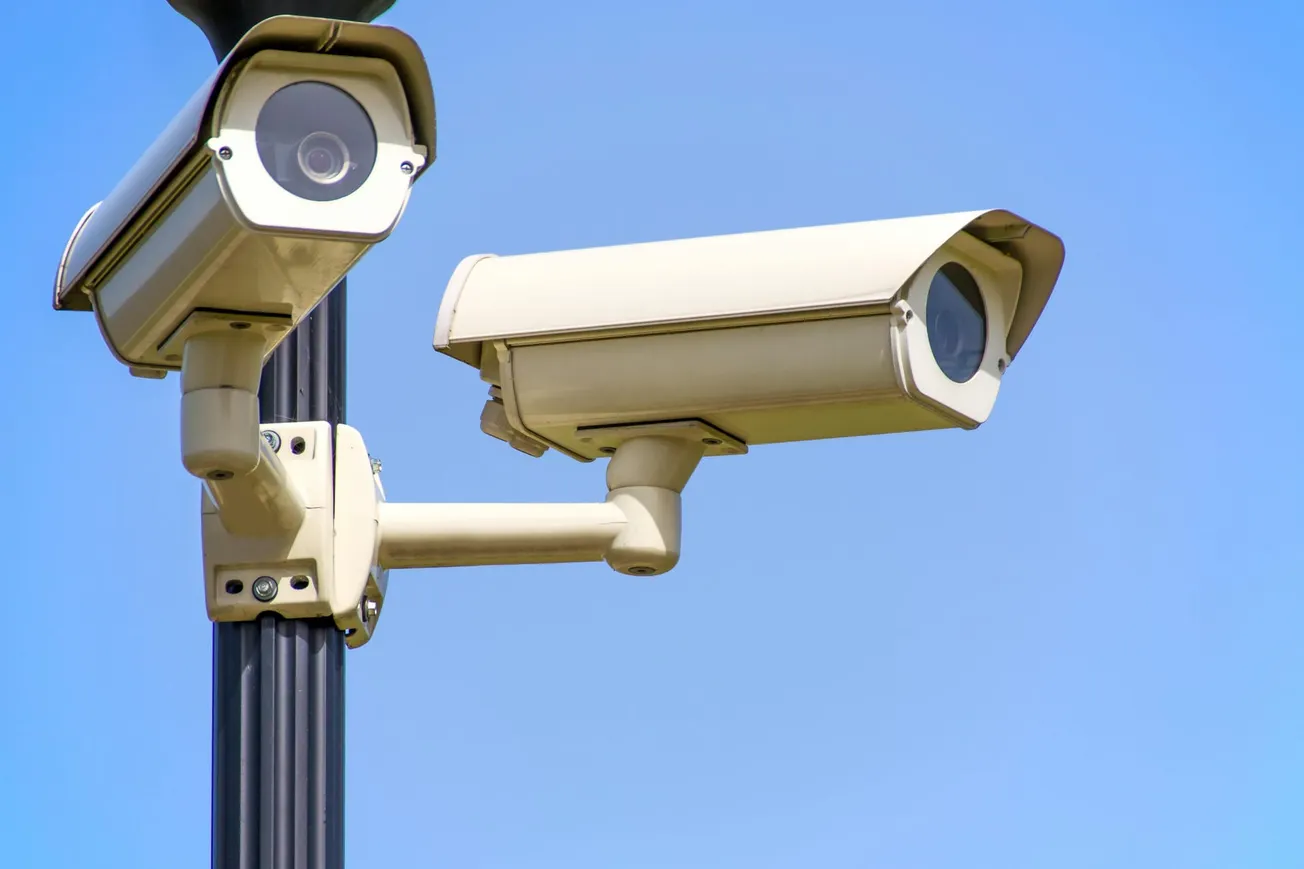
Take a walk around our campus, and you’ll quickly notice that Stanford is home to a massive number of security cameras. Scattered throughout campus, they sit above doors entering dorms and overlook main areas. They watch roads and parking lots. They sit outside dining halls and academic buildings. Cameras cover virtually every single part of campus.
It’s no surprise then that Stanford is home to both the very people who helped write the PATRIOT Act and its own miniature surveillance state.
Despite the prevalence of cameras, the problem they intend to solve, crime, still exists on campus, at times, horrific and terrifying. An alleged sexual assault was recently reported on the row, committed by a suspect who was armed. Bike thefts still hang over students and are frequently reported. Stanford’s Department of Public Safety publishes a regular bulletin that includes reports of break-ins and aggravated assaults.
This is not to say that Stanford is somehow Strait of Hormuz or “O-Block” levels of danger, but it does raise questions about the sheer number of cameras on campus. Year after year, the number of cameras continues to increase, yet there has been no corresponding decrease in crime or increase in safety. While surveillance has become normalized at Stanford as just another fact of campus life, the actual harms of surveillance are intensifying and, paradoxically, making students less safe.
One of the vendors that Stanford has chosen for these security cameras, Flock Safety, has the worst possible combination: overtly Big Brother tendencies and irresponsible security protocols. Flock’s cameras use AI to read and record license plates, essentially allowing law enforcement to stitch together maps of a car’s movements. And Flock’s security has been exposed as laughably bad - so poor that curious tech enthusiasts were even able to remotely access and monitor cameras without any authentication.
The program has been costly and ineffective. Since 2023, Stanford has embarked on a security camera expansion that has cost over $2.35 million. And yet, in key areas, crime has been on the rise at Stanford compared to the years prior to the expansion.
This is an unsurprising outcome. Broadly speaking, the evidence that these cameras even work at preventing crime is mixed at best. Some evidence suggests that CCTV cameras reduce property crime, yet at Stanford, bike theft and general theft remain a fact of life. And there is virtually no evidence to indicate that security cameras decrease violent crime at all. Cameras don’t deter people with evil intentions from doing evil things - you cannot try to impose rational thought on a criminal, a fundamentally irrational actor.
The AI systems that these cameras use have also been widely questioned. First, the accuracy of these systems is still incredibly shoddy. In October of last year, an AI security system misidentified a bag of chips a student was holding at a Maryland high school as a firearm and set off a police response. But beyond that, letting a neural network make a judgment about a person is downright wrong. It takes weights and probabilities and outputs a determination based on them. There is no due process or human involvement.
And there is absolutely no way to opt out of these systems. You don’t know when or where a camera has logged you as an entry. You don’t know how high a risk a surveillance AI rates you. It is impossible to give consent to being surveilled. The system does whatever it pleases - all you are to it is a group of pixels in a bounding box, just another entry in a SQL database.
Finally, at the most basic level, these cameras should be curbed because surveillance itself violates the very essence of our humanity. Just think about the stupid things that you do when no one is looking. When you think that you are truly alone and free to do things, explore, fail, all without the watchful gaze of someone else and the shame associated with it. Surveillance takes the most precious thing about being human - having free will - and steals it from us without our consent.
The appeal of surveillance cameras is undeniable. What better way to combat crime than to constantly monitor students? And when frustration with crime boils over, the urge to find some way to combat it is a natural feeling. Yet the real-world evidence on security cameras has proven otherwise. And rather than bring safety, they bring paranoia and privacy concerns.
It is not enough to trust our laws and institutions to curb abuse. It is not merely enough to blindly trust these companies and their engineers. The Stanford Surveillance State must be rolled back and dismantled.