Table of Contents
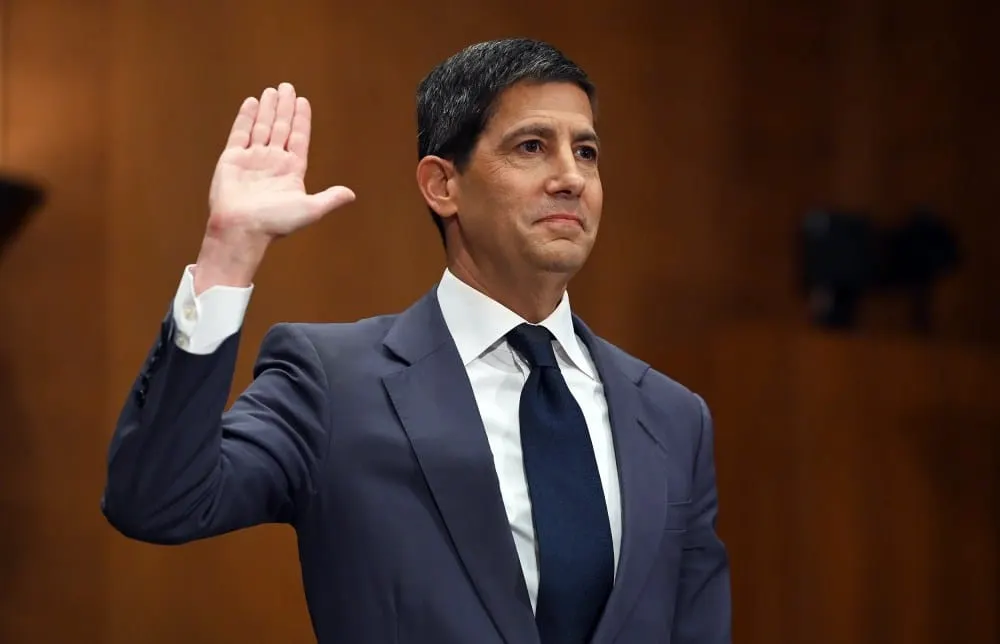
Kevin Warsh, former ASSU Chair, Stanford Review alumnus, and a Stanford Public Policy major, has been confirmed as the 17th chair of the Federal Reserve.
Warsh earned his J.D. from Harvard Law School before transitioning from the M&A department at Morgan Stanley to serving as Special Assistant for Economic Policy to President George W. Bush and as Executive Secretary of the National Economic Council. He then served on the Board of Governors from 2006 to 2011, becoming, at 35, the youngest governor in the institution's history.
He left in 2011, in part over objections to the growth of the Fed's balance sheet, and spent the next fifteen years managing investments at Stanley Druckenmiller's Duquesne Family Office while serving as the Shepard Family Distinguished Visiting Fellow in Economics at the Hoover Institution and a lecturer at the Stanford Graduate School of Business.
The central macroeconomic thesis shaping Warsh’s views on monetary policy is AI's disinflationary impact. In November of 2025, Warsh wrote, “AI will be a significant disinflationary force, increasing productivity and bolstering American competitiveness. Productivity improvements should drive significant increases in real take-home wages. A 1-percentage-point increase in annual productivity growth would double standards of living within a single generation.” This disinflationary expectation suggests Warsh favors lower rates, which he argues should precede productivity growth.
Warsh’s claim is contested. Fed Vice Chair Philip Jefferson offered a more measured view at a German economic conference earlier in January 2026: “AI’s effect on inflation is not solely downward pressure. [While it] will likely help the economy achieve higher growth through increased productivity, it could put upward pressure on certain price categories as many firms push to scale up the technology.”
Recent research from Goldman Sachs points to the latter hypothesis. For example, data center demand contributed to a 4.6% year-over-year rise in consumer electricity prices. Goldman estimates that higher electricity costs will add 0.2 percentage points to headline inflation in 2026 and 0.15 percentage points in 2027. However, Warsh is correct that productivity gains are sapping demand inflation. US productivity grew roughly 2.7 percent in 2025, nearly double the 1.4 percent annual average of the past decade.
Warsh’s intent to lower interest rates in response to AI-driven disinflationary pressures is also highly favorable to American AI dominance. China has the requisite physical infrastructure for AI buildout, from grid capacity to data centers. While America dominates at the model level, it lags in grid capacity and data center construction speed. Cheaper capital will ease the financing of new data centers, chips, and energy generation, helping convert America's model lead into physical capacity before China's infrastructure advantage compounds.
Warsh may be the first Federal Reserve Chairman who is closer to Silicon Valley than to Wall Street. As Alex Karp, CEO of Palantir, told Warsh in a 2022 discussion, “You wouldn’t be hanging out with us if you were as normal as you claim to be.”
The policies Warsh supports reflect this. According to Warsh, “Money on Wall Street is too easy, and credit on Main Street is too tight. The Fed’s bloated balance sheet, designed to support the biggest firms during a bygone crisis, can be reduced significantly. That largesse can be redeployed in the form of lower interest rates to support households and small and medium-sized businesses.”
When the Fed buys trillions in long-term bonds, it makes long-term and risky borrowing unusually cheap, but in Warsh’s view, the only companies that can actually tap that cheap money are firms big enough to issue bonds on the capital markets. This prevents the creative destruction needed to power the engine of American capitalism, leaving corporate zombies in its wake. Because a startup can't issue a bond, the Fed's policy is allocatively distorted in favor of large incumbents.
Warsh's proposal to fix the problem is to switch instruments: shrink the balance sheet and lower the policy rate. Shrinking the balance sheet ends monetary policies that favor Wall Street and revitalizes the Schumpeterian churn. Meanwhile, the overnight rate is a neutral instrument that affects bank loans, mortgages, and corporate bonds equally.
America has a dedicated public servant and son of Stanford at the helm of the Federal Reserve, and we are the better for it.